
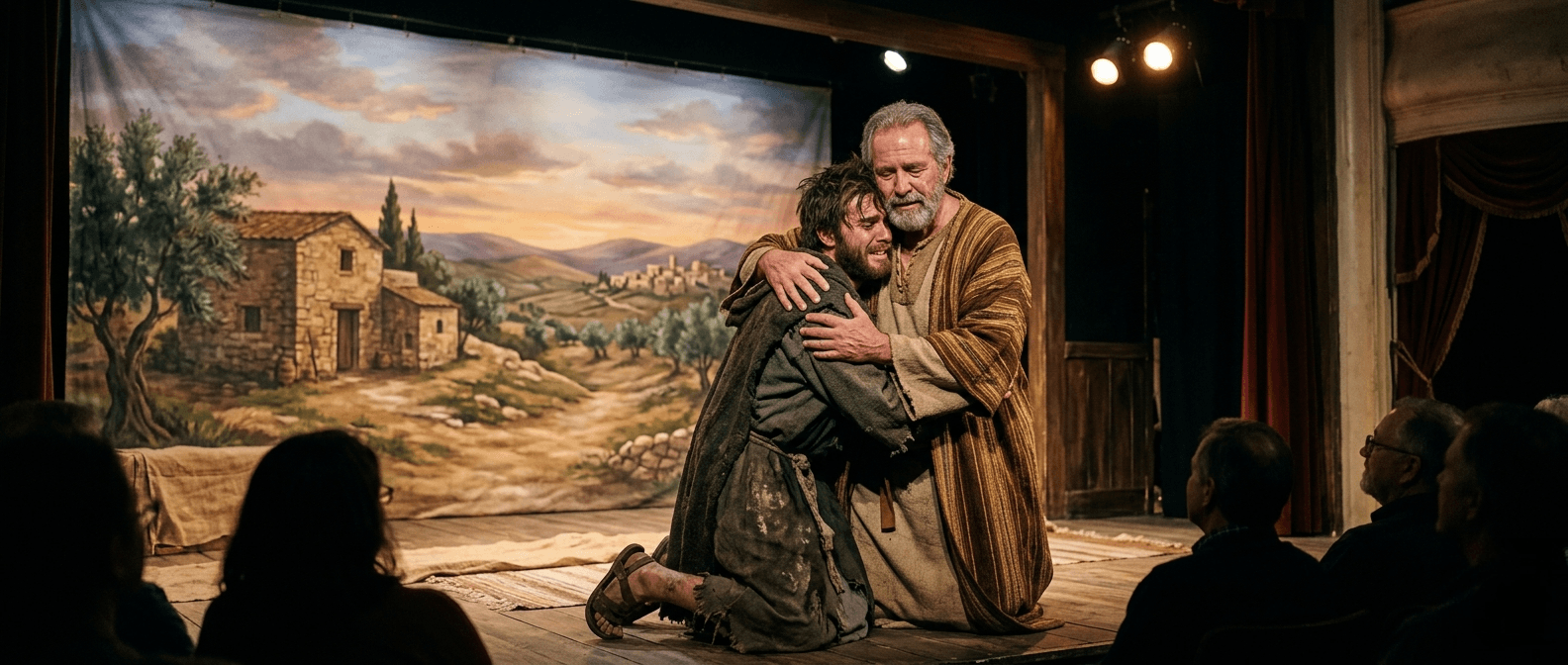
Have you ever noticed how a dry list of rules tends to go in one ear and out the other, but a gripping story stays with you for a lifetime? We’ve all sat through lectures that felt like a marathon, yet we can still vividly remember the plot of a book we read a decade ago. There’s a reason for that. Our brains aren’t just wired for data; they are hardwired for narrative.
When we look at the history of communication, the blueprint for how we share truth through biblical drama at DGPA wasn't found in a textbook—it was found in the dirt of dusty roads and the decks of fishing boats. Jesus, the Greatest Storyteller, rarely just gave a to-do list. Instead, He painted pictures with words, creating a legacy that modern Christian drama is still following today.
1. The Strategy of the Backdoor
One of the most brilliant aspects of a parable is its ability to bypass our natural defenses. When Jesus told the story of the Good Samaritan, He wasn’t just giving a lecture on social ethics; He was setting a trap for the heart. By the time the listeners realized the villain was the hero and they were the ones being challenged, the message had already taken root. Stories allow us to see ourselves in characters before we have the chance to put up our guard.
In modern drama, we use this same backdoor strategy. When an audience walks into a theater, they expect to be entertained, not preached at. By presenting relatable characters facing difficult choices, we allow the audience to experience conviction and inspiration organically. Just as the parables used common stories of common men, modern Christian drama uses the everyday struggles of life to point toward eternal truths.
2. High Stakes and Relatable Drama
Jesus didn't tell safe stories; He told stories with massive stakes. Think about the Prodigal Son. That wasn’t just a story about a kid moving away; it involved inheritance, famine, rock-bottom failure, and a scandalous level of forgiveness. He used the tension of the narrative to highlight the depth of God's grace. He understood that for a message to be vital, the story needs to feel urgent and the emotions need to be real.
Christian theater today thrives when it embraces that same honesty. We don't shy away from the heaviness of the world to be faith-based. In fact, the most powerful Christian stories are those that acknowledge the darkness so that the light of Christ can shine even brighter. When we lean into the high stakes of the human experience—forgiveness, sacrifice, and redemption—we are following the exact dramatic structure Jesus established centuries ago.
3. Excellence as an Act of Honor
Jesus didn't just tell stories; He told good stories. They were culturally relevant, linguistically beautiful, and perfectly timed. He used vivid imagery—the "eye of a needle," "pearls before swine," "houses on sand"—that made his messages impossible to forget. He respected His audience enough to use His craft with excellence, ensuring that the medium was worthy of the message.
We believe that if the message is the most important thing in the world, the way we present it should be the best quality possible. Settling for cheesy or cringe isn't just a stylistic choice; it’s a missed opportunity to honor the Creator. When we put in the work to make our acting sharp, our lighting professional, and our scripts tight, we are reflecting the intentionality and excellence that Jesus modeled in every word he spoke.
Telling the Story Today
At DGPA, we aren't just putting on productions; we are continuing a tradition of storytelling that started in Galilee. We know that a well-placed line or a powerful song can reach a heart in a way a sermon might not. We take the style of the parables—the honesty, the stakes, and the invitation to change—and we bring it to life under the stage lights.
Whether we are producing a youth musical or a community drama, our goal is the same: to tell a story that gives God glory. We want our performers to realize that their talent is a tool for ministry and our audience to leave feeling like they’ve seen a glimpse of the Kingdom. At the end of the day, we’re just a group of people trying to follow the lead of the Great Director, one story at a time.